


Cloth Seals
Historically Taunton was known for its woollen industry and clothmaking. This started in Medieval times using wool from Dunster but by the 17th Century wool was being imported from Ireland and Wales via Minehead and being turned into cloth in Taunton by the many weavers and dyers. According to research it is believed there may have been as many as 1500 weevers and looms in Taunton during this time. They would mainly have been making Taunton Serge cloth and this was exported throughout the UK and abroad to places such as the USA and Sweden.
Taunton cloth was highly regarded and had to follow strict quality control rules to ensure that the clothier hadn’t used cheaper threads in the cloth and that it was the correct length and weight. When the bale of cloth was ready to be sold it was inspected by an official called an ‘Aulnager’ and a lead seal was added to the fabric bale to show that it was official Taunton Cloth and conformed to the standard.
This lead cloth seal from Taunton shows the number 76 which is an abbreviation for the year 1676. Some of these Taunton seals have been found in West Virginia in the USA. Note that the ‘N’ in Taunton looks like it is reversed and the ‘U’ looks more like a ‘V’, this is possibly due to the level of literacy at the time although its difficult to know for sure.

Below is a weaving loom similar to the ones used in the attics of houses in Taunton

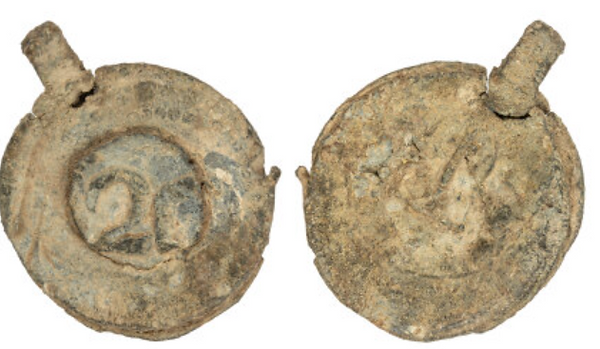
I have also found evidence in our fields of imported cloth bales from the Netherlands who were themselves widely known for their cloth. The cloth seal below is from Harlem and is also from the 17th Century. On the front side it has the shield and sword which is the emblem of Haarlem and on the reverse it shows the number 20 which refers to the cloth length.
These finds are a reminder of a forgotten industry that was once very important for the area. Along with weaving there were many other cloth based jobs in Taunton, such as dyers who dyed the cloth and this is likely to be where the local surname ‘Dyer’ originates from.