STOKE SUNDAY HISTORY SPOT
Investigating the Past, to Understand the Present, to Plan for the Future
Click HERE for Main History Site
From Slime Batch to Bath Brick
Long before Vim, Brillo Pads, Ajax and Cif, there were Bath Bricks. It all started around 1820 when it was discovered that using silt from the banks of the River Parrett, bricks could be made which when scraped would produce a gritty substance suitable for scouring metal. The river carries a heavy burden of silt. This is deposited on each tide as a layer of slimy yellow matter. Square pens were constructed on the river bank to trap the silt. After two or three months, this would be ‘harvested’, ground by a horse-driven mechanism and shaped into bricks for kiln-firing.
The bricks, some two or three inches across, were patented in 1827 by John Browne and became a world-wide commodity. At its peak, 24,000,000 bricks per year were being produced by ten different Bridgwater companies, especially during First World War when they were part of the soldier’s standard kit issue.
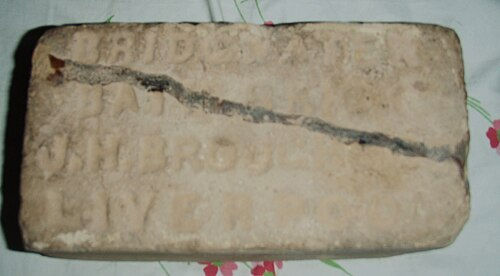
Why the River Parrett? The Parrett carries an unusually heavy load of fine alluvial silt, washed down from the Tone and Yeo and pushed inland by the tide. This silt has four key qualities:
Very fine grain — perfect for polishing
High silica content — gives the brick its mild abrasive bite
Natural binding properties — allows it to be moulded and dried
Low sand content - avoids scratching metal surfaces
This combination is rare. Few British rivers produce a silt that can be moulded like clay yet polishes like pumice.
In addition, the Parrett is tidal to 18 miles inland, with a very sluggish flow, ideal for depositing the silt. Banks would build up on the inside of bends and would physically force the river to change course. 18th‑ and 19th‑century drainage reports describe “encroaching mud” and “silted shoulders,” but the local name has always been "slime batch". Modern dredging records still refer to upper‑bank deposits — the direct descendants of the historic mudbanks.
